How Diabetes Affects Foot Health – A Guide for Broward County Residents
In Florida, over 2 million people live with diabetes, and Broward County sees its share of that burden. High blood sugar levels quietly damage nerves and blood vessels, hitting the feet hardest. This leads to problems that can steal your mobility if you ignore them.
This guide helps Broward residents spot
diabetic foot risks early. You'll learn how diabetes harms feet, simple ways to protect them, and where to find local care. Knowledge like this keeps you walking strong in our sunny state.
Understanding Diabetic Neuropathy: The Nerve Damage Epidemic
Diabetes often starts a chain of nerve troubles that target your feet. This condition, called neuropathy, comes from years of high sugar in the blood. It makes daily steps risky without you even knowing.
What is Peripheral Neuropathy and How Does It Start?
Peripheral neuropathy hits the nerves far from your body's core, like those in your toes and feet. High blood sugar harms these nerves over time, much like how rust eats metal. You might first notice tingling or numbness that spreads upward.
Burning pain can wake you at night. Many folks in Broward brush it off as just getting older. But it's a sign to check your sugar levels and talk to a doctor.
The Dangerous Loss of Protective Sensation
Without feeling in your feet, you can't sense small injuries. It's like walking blindfolded—you miss cuts or hot spots that turn bad fast. This loss lets blisters form into deep sores.
Pain usually warns us to stop and fix a problem. Here, that warning vanishes. Everyday rubs from shoes go unnoticed, building up trouble.
Autonomic Neuropathy’s Hidden Impact on Foot Skin
Autonomic nerves control sweat and oil in your skin. Diabetes messes with them, so feet get too dry. Cracks appear, inviting germs inside.
Dry skin splits like parched earth in our dry spells. This makes infections easy. Keep an eye on rough heels or scaly spots between toes.
Take the Next Step in Your Foot Care
Want to get a professional diabetic foot exam? Connect with a trusted podiatrist in Broward County today.
Vascular Complications: Hindered Healing in the Sunshine State
Poor blood flow adds to diabetes woes, especially in warm spots like Broward. High sugar speeds up artery clogs, starving feet of what they need. Healing slows to a crawl.
PAD: Reduced Blood Flow to Lower Extremities
Peripheral artery disease, or PAD, narrows vessels with plaque buildup. Less oxygen reaches your feet. Smoking makes it worse—it's a common habit here that amps up the risk.
Tissues weaken without good flow. Even small wounds struggle. Feet feel tired quicker during beach walks or errands.
The Vicious Cycle: Poor Circulation and Slow Wound Closure
A tiny cut that heals in days for others takes weeks for you. Bad circulation keeps nutrients away from the spot. Ulcers form when pressure hits sore areas.
This cycle repeats if sugar stays high. Feet swell or change color. Break it by quitting smokes and moving more.
Recognizing Signs of Ischemia
Watch for cold toes, even in our heat. Skin might turn pale or blue. Pain in calves when you walk signals trouble—it's called claudication.
Don't wait for these clues. Check pulses in your feet daily. Early signs mean you can act before things worsen.
The Diabetic Foot Ulcer: Causes, Risks, and Urgency
Ulcers top the list of foot dangers for diabetics. They start small but grow fast without care. In South Florida, heat and sand can make them infect quicker.
From Blister to Ulcer: The Progression of Unmanaged Pressure
Ill-fitting sandals cause blisters on the ball of your foot or under big toes. Repetitive steps from work or play add stress. Altered gait from neuropathy shifts weight wrong.
What begins as a red spot deepens into an open sore. Moisture from sweat keeps it damp. See a doc right away if you spot one.
Infection and Osteomyelitis: When Bacteria Take Hold
Bacteria love warm, wet ulcers. They spread deep into tissue fast. Osteomyelitis means infection reaches bone—it's painful and needs strong meds or surgery.
Fever or pus signals bad news. In Broward, humid air helps germs thrive. Clean wounds and cover them to fight back.
Amputation Risk Factors for South Florida Diabetics
Nationwide, diabetes leads to over 100,000 leg amputations yearly. Long-term Type 2 cases face higher odds. Poor control doubles the chance.
In Florida, hot weather tempts barefoot strolls that invite cuts. Prevention cuts this risk by 85%. Stay on top of checkups to keep both feet.
Essential Daily Foot Care: Your First Line of Defense
Simple habits shield your feet from diabetes harm. Do them every day to spot issues early. They're quick and fit our busy Broward life.
The 5-Minute Daily Inspection Routine
Sit down and look at both feet. Check for cuts, blisters, or red areas. Feel for swelling or hot spots with your hands.
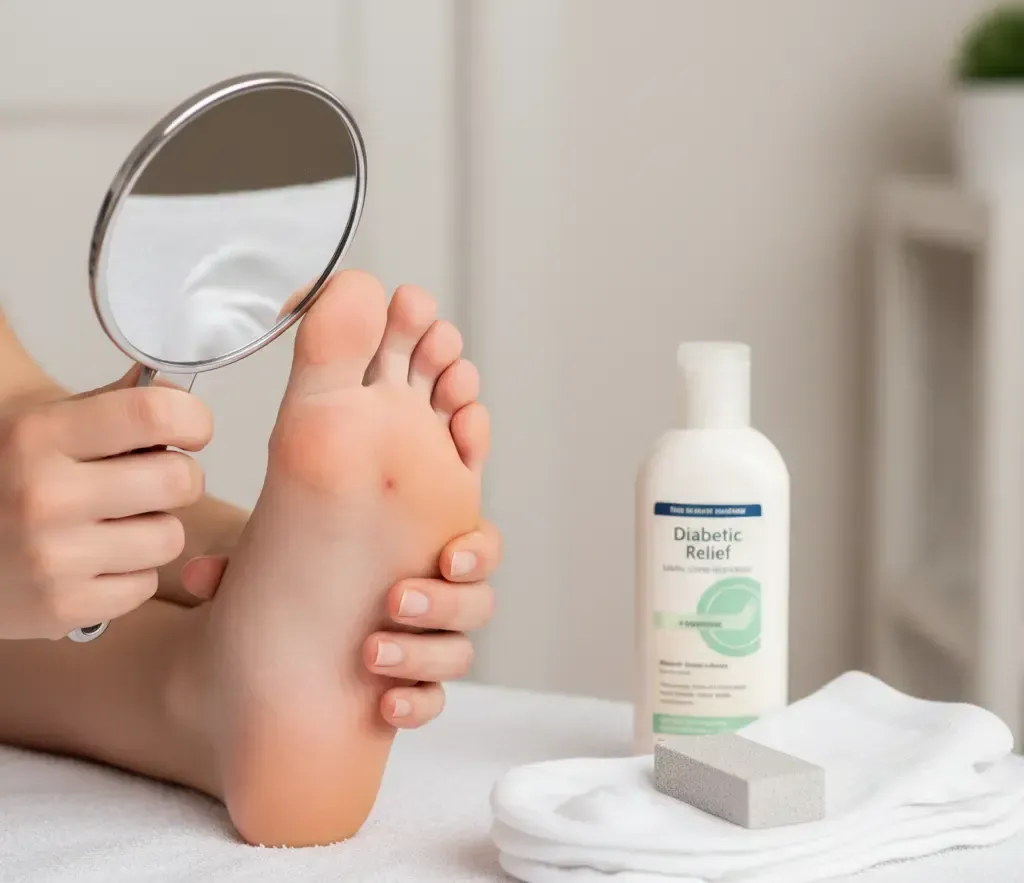
Use a hand mirror for the soles. Compare toes side by side. Note any changes and log them.
- Look between toes for moisture.
- Press gently to feel firmness.
- Watch for black spots that mean dead tissue.
Proper Washing, Drying, and Moisturizing Techniques
Wash feet in warm—not hot—water each day. Pat dry, especially between toes, to avoid fungus. Skip soaking too long; it softens skin.
Apply lotion to tops and bottoms only. Don't put it between toes—it traps moisture. Do this after drying to lock in softness.
Our humid air makes feet sweat more. Change socks if they dampen. Cotton blends wick away wetness best.
Choosing the Right Footwear in Broward’s Climate
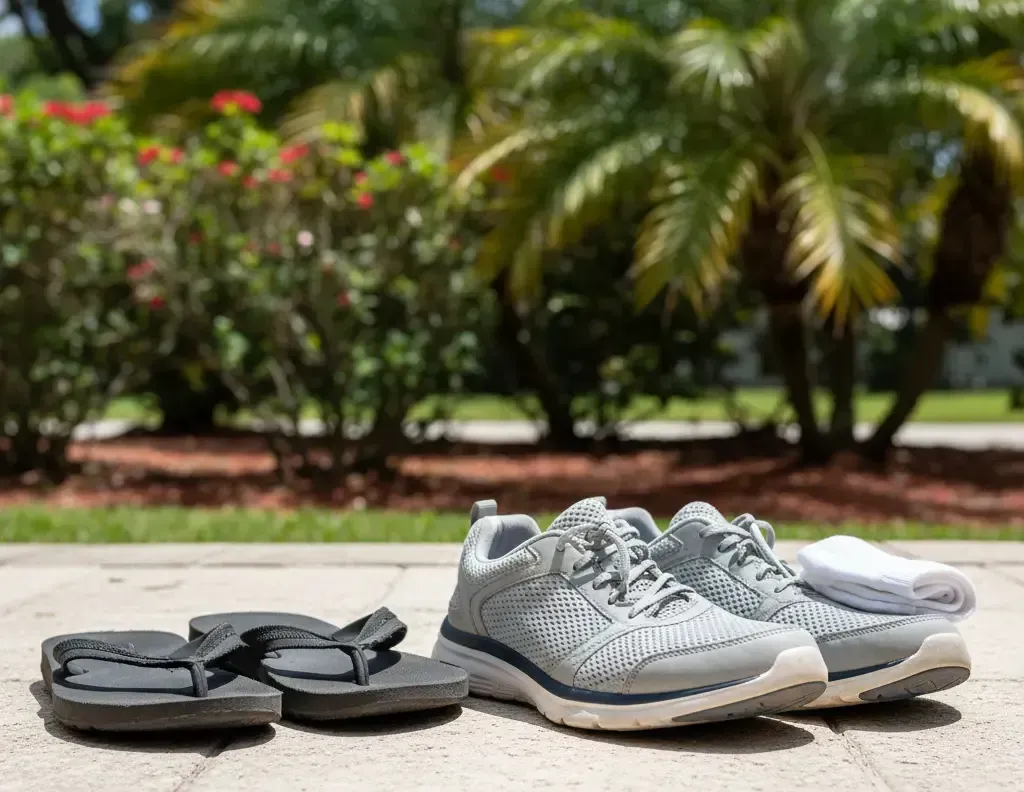
Pick shoes with wide toes and soft insides. Breathable mesh suits our heat. Avoid flip-flops for long walks—they rub wrong.
Wear socks with cushioning. Never go barefoot, not even at home or on sand. Test new shoes slowly to break them in.
Local stores in Fort Lauderdale offer diabetic lines. Fit matters more than style here.
Partnering with Your Healthcare Team in Broward County
You can't do it alone—docs guide your foot health. Broward has top podiatrists and clinics ready to help. Team up for better outcomes.
The Role of the Podiatrist: Beyond Basic Nail Care
Podiatrists test nerves with a monofilament tool. They check pulses and skin too. Visit once a year, or more if numbness grows.
They trim nails safely to avoid cuts. In Broward, places like Memorial Regional offer quick appointments. Ask for a diabetic foot exam.
Custom Orthotics and Offloading Devices
Inserts shift weight off sore spots. They fit your unique foot shape. Shoes with extra depth hold them well.
For bad ulcers, boots offload pressure. Get them from a specialist. They speed healing and prevent repeats.
Managing Blood Glucose: The Foundational Treatment
Keep A1C under 7% to protect nerves. Check sugar often and follow your meal plan. Meds or insulin help steady it.
Good control slows damage big time. Track trends with a home meter. Share results at every visit.
Taking Control of Your Foot Health Journey
Diabetes changes how feet work, from numb nerves to slow-healing cuts. But daily checks, smart shoes, and doc visits keep risks low. In Broward, local help makes it easier to stay active.
Vigilance pays off—you hold the power. If numbness or sores appear, see a provider now. Proactive steps preserve your steps for years ahead.
Secure Your Foot Health Now
Don't wait for a small issue to become a big problem. Book your appointment with a specialist now.